
Marks & materials
How to read a jewelry hallmark without treating it as proof
A stamp can help identify possible fineness, but it cannot prove who made a piece, what it contains or whether it is authentic.
Published
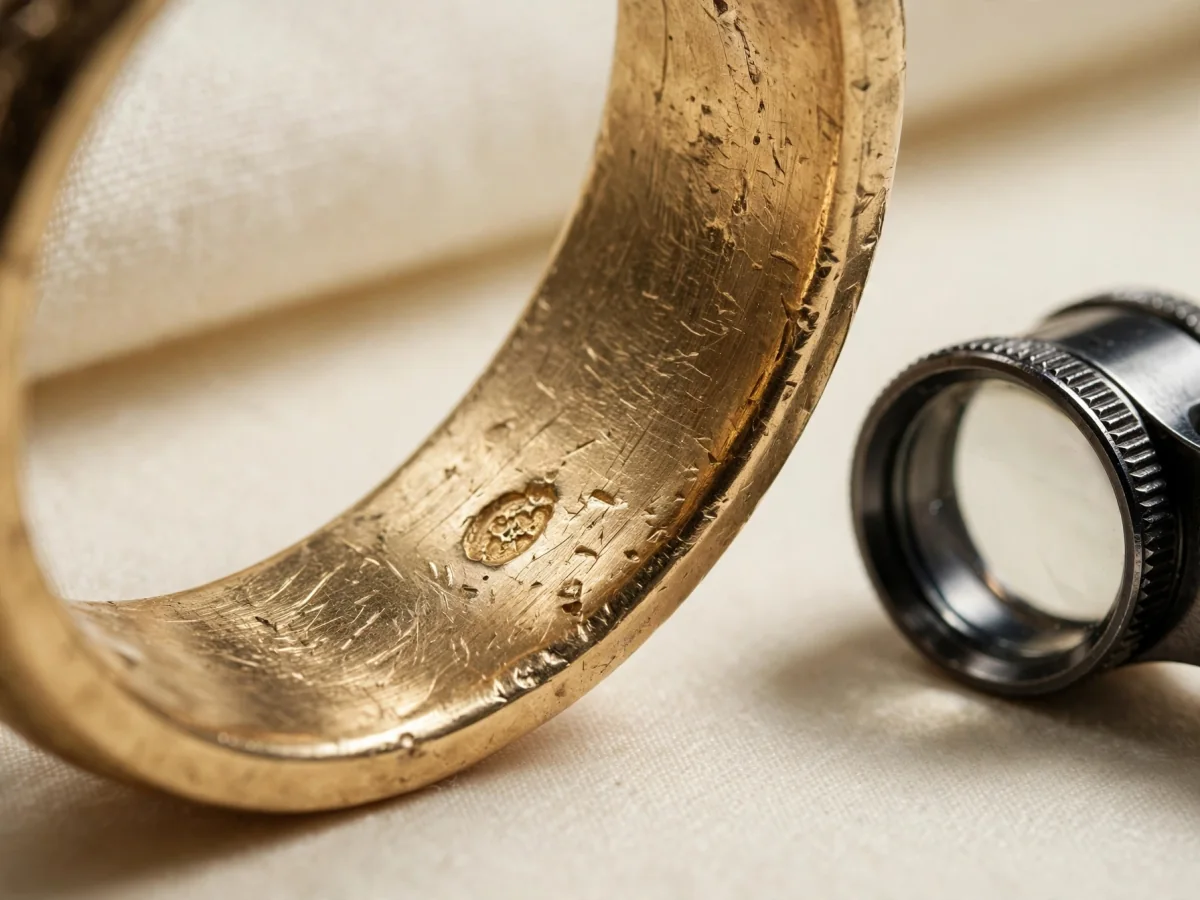
Look before cleaning or polishing
Check common tucked-away places: the inside of a ring band, the back of a pendant, an earring post or a clasp. Use bright, even light and a magnifier if you have one. Photograph the mark in focus, then take a wider photo that shows where it sits on the piece.
Avoid aggressive polishing before documenting a worn or old piece. A faint mark may be important, and surface work can change what remains visible. If the item is fragile or valuable, ask a jeweler before cleaning it.
Separate the mark from the story around it
A karat mark such as 14K or 18K refers to gold purity, while a carat is a unit of gemstone weight. The U.S. Federal Trade Commission explains that, in the United States, a gold quality mark should be accompanied by the registered trademark or name responsible for that mark. Marking conventions and consumer rules differ by country.
Even a readable stamp is one piece of evidence. It does not tell you the full condition, repairs, stone identity, treatment history or current resale value. Similar stamps can be worn, copied or misunderstood.
Use a photo tool for context, not authentication
An image-based AI result can help you explore what a visible mark or piece might suggest. If the stamp is tiny, worn or photographed at an angle, the result may not describe it correctly. Do not treat a suggested reading as a test of metal content.
For a purchase or sale, ask for documentation and have a qualified professional examine the item. When local marking rules matter, consult an official consumer-protection or hallmarking source for the relevant country.
Keep the observation attached to its source
Save a clear photo of the whole item, a close view of the mark, and any seller paperwork or older appraisal separately. Record which detail came from a stamp and which came from a conversation or an AI-generated description.
That small distinction makes later research easier. It also prevents a tentative image-based suggestion from becoming an undocumented claim about what the jewelry is.
Sources and further reading
- Buying Platinum, Gold, and Silver Jewelry — U.S. Federal Trade Commission — U.S. consumer guidance on gold quality and trademark marks.
- GIA 4Cs: Carat Weight — Explains the difference between gemstone carat weight and gold karat.
Keep exploring
All blog posts
How to tell if a diamond is real: myths and reliable checks
The fog test, the water glass and the newspaper trick are everywhere, but none of them can prove a diamond is real. Here is what home checks can honestly tell you, what a jeweler's tester measures, and how a grading report settles the question.
Read article
Gold price drop: what it means for the value of your gold jewelry
Spot gold fell below $3,900 an ounce on October 30, 2026, its lowest level in more than a year. Here is how a falling gold price changes the melt value of your rings and chains per gram by karat, what it does and does not do to buyer offers, and how to recalculate your own pieces.
Read article