
Hallmarks
What does 925 mean on jewelry?
A 925 stamp is the fineness mark for sterling silver: 925 parts silver per 1,000. Here is where you will see it, why it turns up on gold-coloured pieces, and what it cannot prove.
Published
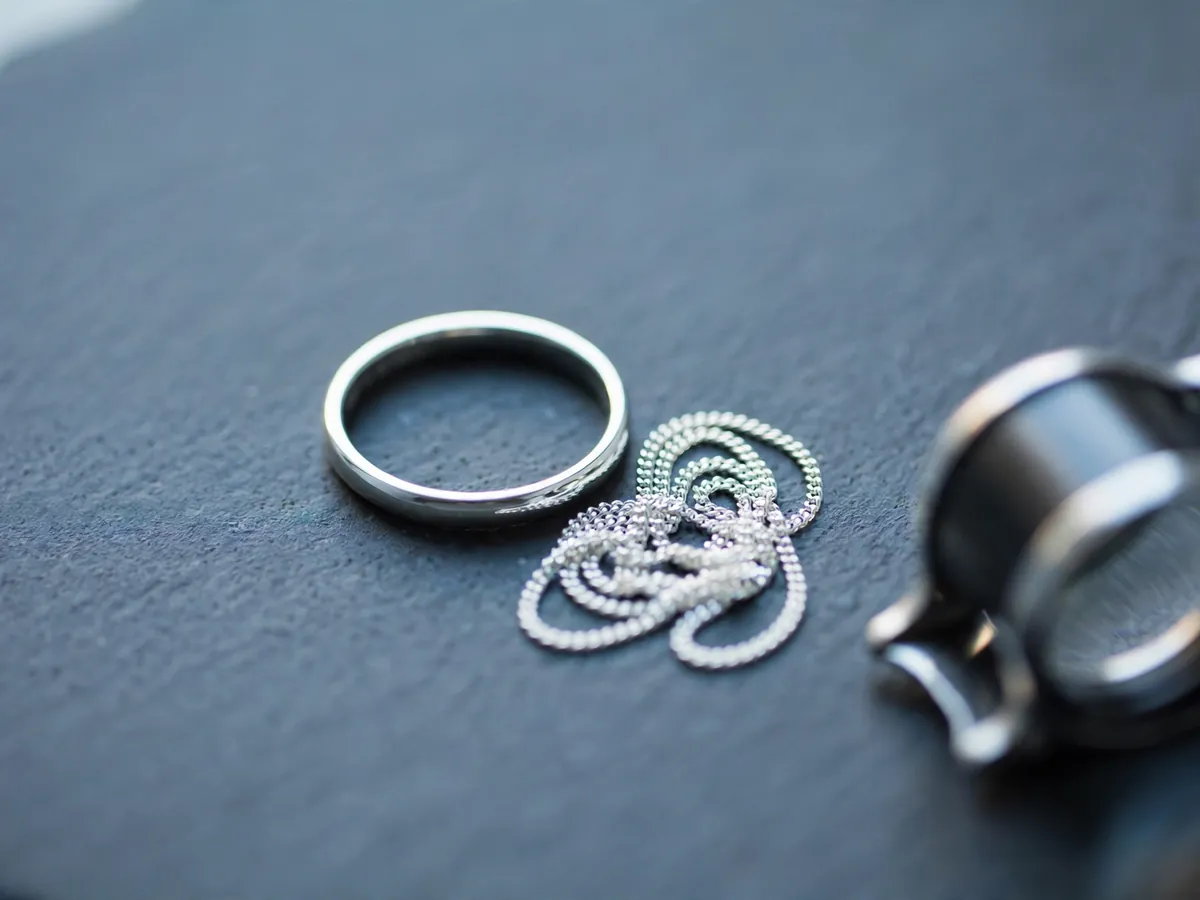
The short answer: 925 means sterling silver
925 is a fineness mark, written in parts per thousand. It means the metal is 925 parts pure silver in every 1,000 parts of the alloy, or 92.5% silver. The remaining 7.5% is usually another metal, most often copper, added because pure silver is too soft for rings, chains and clasps that get worn every day.
That 92.5% alloy is what the jewelry trade calls sterling silver. The US Federal Trade Commission’s jewelry guidance says the words “silver”, “sterling” and “sterling silver” describe products that contain 92.5% pure silver, and that such pieces are sometimes marked 925. So “925”, “Sterling” and “Ster.” on a piece are making the same claim.
Where you will see 925 and the words that go with it
On rings, look inside the band. On necklaces and bracelets, look on the clasp, the jump ring next to it or a small tag soldered near the end. Earrings often carry it on the post or the hook. The stamp is tiny, so a loupe or your phone camera zoomed in under good light helps.
The number rarely appears alone. In the United States, the FTC says silver items must also show the name or US registered trademark of the company or person that stands behind the mark. In the UK, a full hallmark has three compulsory parts: a sponsor’s mark, a fineness mark and an Assay Office mark. Other words you may see nearby mean different things:
- “925”, “Sterling” or “Sterling silver”: 92.5% silver.
- “Coin silver”: 90% silver, according to the FTC.
- “Silver plate”: a layer of silver applied to a base metal, not solid silver.
- “Vermeil”: sterling silver coated or plated with gold.
Why a gold-coloured piece can be stamped 925
People are often surprised to find 925 inside a yellow ring. Usually it means the piece is sterling silver underneath with a gold layer on top. When that layer is applied to sterling silver, the FTC calls the result vermeil. The 925 describes the base metal, not the colour you see.
This matters for value and for wear. The gold layer on plated jewelry is thin and wears away over time, depending on how the piece is worn and how thick the plating is. A gold-coloured piece marked only 925, with no karat mark such as 14K or 585, should be treated as gold-coloured silver until a jeweler tells you otherwise.
What a 925 stamp does not prove on its own
A stamp is a claim, not a test result. Anyone with a punch can strike 925 on plated base metal, and worn or partial stamps are easy to misread. A UK hallmark is stronger evidence because an Assay Office has tested the item, but small items do not have to be hallmarked there: GOV.UK lists 7.78 grams as the minimum weight at which silver must carry a hallmark.
Simple home checks have limits. Silver is not magnetic, so a strong pull from a magnet is a warning sign, but a piece that does not react could still be plated brass or another non-magnetic base metal. Tarnish does not prove much either, because many alloys darken. If the answer affects a purchase or a sale, ask a jeweler or an assay office to test the metal.
Other silver numbers you may find next to 925
925 is the most common silver mark, but it is not the only one. Silver fineness is written the same way as gold fineness, in parts per thousand, so the number tells you the claimed share of silver directly. Older and imported pieces in particular may carry a different standard, and knowing the main ones helps you avoid assuming everything silver-coloured is sterling.
In the UK, the recognised silver fineness standards are 800, 925, 958 and 999, and 958 is known as Britannia silver. Elsewhere you may also see 900 or 950, depending on the country and the age of the piece. A number below 925 is not a fault; it simply means a lower share of silver than sterling, which affects the metal value.
- 800: 80% silver, often seen on older European pieces.
- 900: 90% silver, the same share the FTC gives for coin silver.
- 925: sterling silver, 92.5%.
- 958: Britannia silver, 95.8%.
- 999: fine silver, very soft and less common in everyday jewelry.
Why sterling silver tarnishes, and how to care for it
Tarnish is the dark film that builds up on silver over time. It forms when silver reacts with sulfur compounds in the air and in some everyday materials, such as rubber bands, some papers and certain foods. It is a surface change, not a sign that a piece is fake, and it tends to show first in the places that are not rubbed during wear.
Store sterling pieces dry, away from rubber and in a closed bag or box, and wear them regularly; gentle rubbing during wear slows tarnish down. To clean, use a soft silver cloth or mild soap and warm water, then dry the piece fully. Be careful with plated and vermeil pieces: abrasive polishes and hard rubbing can wear the thin gold or silver layer away, so use only a soft cloth on them.
- Keep pieces dry and store them in a closed pouch or box.
- Keep silver away from rubber bands and harsh household chemicals.
- Clean gently with a silver cloth, or mild soap and warm water, and dry thoroughly.
- Avoid abrasive polish on plated, vermeil or oxidised pieces, where the dark finish is part of the design.
A worked example: the metal in a sterling bracelet
Say you have a bracelet stamped 925 with a maker’s mark, and it weighs 20 grams on an accurate scale. It has no stones or cords. Multiply 20 by 0.925 and you get 18.5 grams of pure silver. Silver, like gold, is often priced per troy ounce, and one troy ounce is about 31.1 grams, so divide an ounce price by 31.1 to get a price per gram before you multiply.
The result is the metal-only reference value. For many sterling pieces it is the smallest part of what they are worth: a signed designer piece, a well-made vintage bracelet or an item in demand with collectors may sell for well above its silver content. If the value matters, compare a melt offer with what similar pieces sell for, and ask a qualified professional.
Common mistakes with 925 jewelry
These mix-ups are easy to avoid once you know them.
- Reading 925 on a yellow piece as gold. It describes sterling silver underneath, usually with a gold layer.
- Treating tarnish as proof of fake silver. Sterling tarnishes too.
- Treating no tarnish as proof of real silver. Plated and rhodium-coated pieces can stay bright.
- Polishing plated or vermeil pieces hard, which can wear through the surface layer.
- Weighing stones, cords or steel springs as silver when estimating metal value.
What 925 means for value
For the metal alone, the arithmetic is simple: the weight of the silver parts in grams, multiplied by 0.925, multiplied by the current silver price per gram. Weigh without stones, cords or other parts that are not silver, and remember that a buyer who melts silver will usually pay less than the full metal value.
For many sterling pieces, design, maker, age and condition matter more than the metal. If you want a quick first read on a piece, Jewelry Identifier — CaratAI can look at a photo and give AI-generated observations about the visible type, materials and style, plus an estimated value range you can save to your collection. That is an estimate, not an appraisal or an authenticity finding; for a decision that depends on value, consult an independent qualified professional.
Frequently asked questions
Is 925 real silver? A genuine 925 mark means the alloy is 92.5% silver, which is sterling silver. It is real silver, not pure silver, and the mark itself is a claim rather than a test result.
What does 925 Italy or 925 with letters mean? The number describes the silver content; words or letters next to it usually identify a country, a maker or a trademark. In the United States, the FTC says silver items must show the name or registered trademark of the company or person standing behind the mark.
Can 925 jewelry be worn every day? Yes, sterling is made for everyday wear. It may tarnish or scratch over time, and regular wear plus gentle cleaning keeps it looking good.
Is a gold ring stamped 925 worth less than gold? Usually, yes. 925 describes sterling silver, so a gold-coloured ring stamped only 925 is normally gold-plated silver or vermeil, and its metal value is based mostly on silver.
Sources and further reading
- Federal Trade Commission: Buying Platinum, Gold, and Silver Jewelry — Sterling silver as 92.5% silver, the 925 mark, the trademark requirement, coin silver, silver plate and vermeil.
- GOV.UK: Hallmarking practical guidance summary — The three compulsory parts of a UK hallmark, fineness in parts per thousand and the 7.78 gram minimum weight for silver.
Keep exploring
All blog posts
How to tell if a diamond is real: myths and reliable checks
The fog test, the water glass and the newspaper trick are everywhere, but none of them can prove a diamond is real. Here is what home checks can honestly tell you, what a jeweler's tester measures, and how a grading report settles the question.
Read article
Gold price drop: what it means for the value of your gold jewelry
Spot gold fell below $3,900 an ounce on October 30, 2026, its lowest level in more than a year. Here is how a falling gold price changes the melt value of your rings and chains per gram by karat, what it does and does not do to buyer offers, and how to recalculate your own pieces.
Read article