
Collecting
A photo checklist for researching vintage jewelry
Record visible marks, dimensions, condition and history before comparing descriptions or asking a specialist; photos cannot settle authenticity or value.
Published
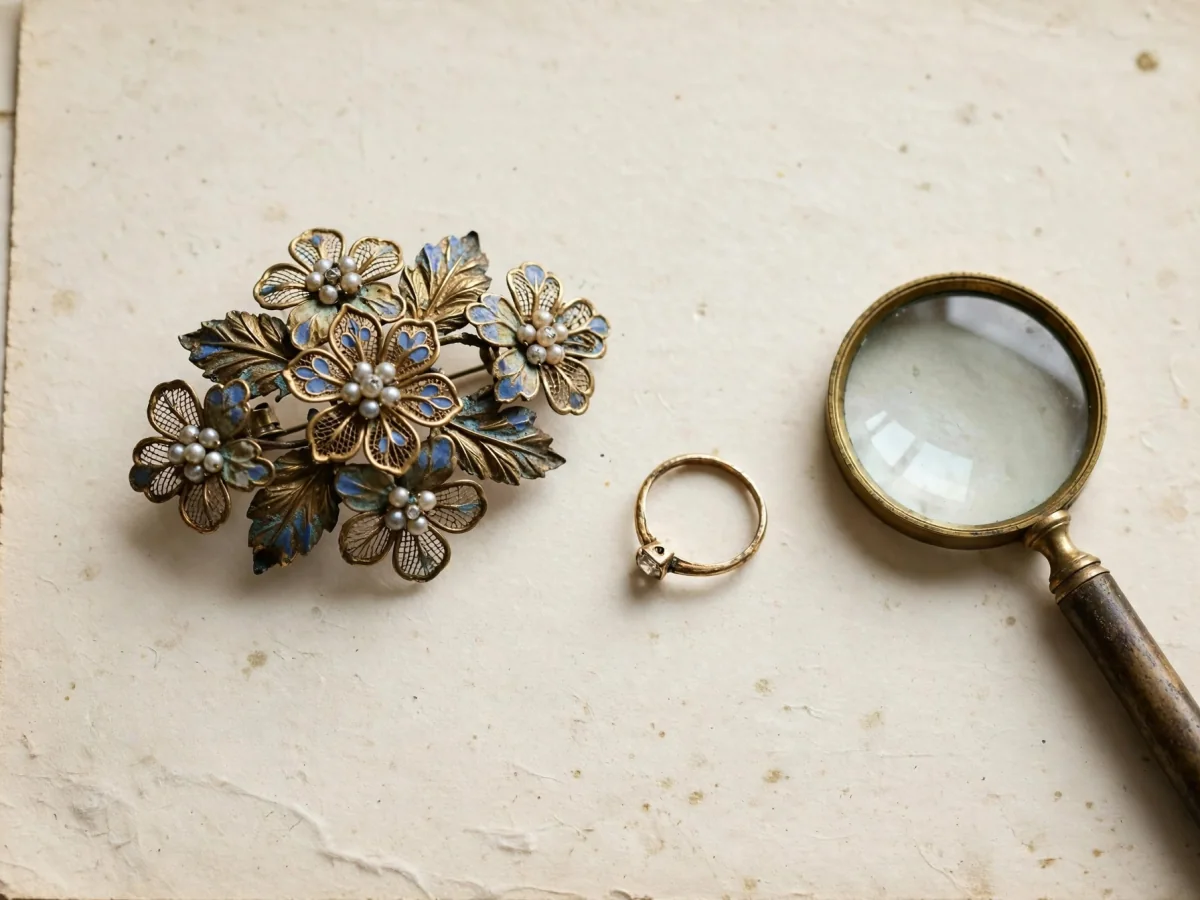
Record the whole piece first
Photograph the item from a straight-on angle on a plain surface. Include the overall silhouette, how stones are set, the back and any closure or clasp. Add a close view of a signature or mark if one is visible, and keep the original image rather than relying on a heavily edited copy.
A phone camera can soften tiny lettering. Use stable support, focus carefully and take another frame if the mark is blurred. Avoid changing the color in an editor when material appearance is part of the question.
Write down the story separately from the visible clues
Note where the piece came from, who owned it if known, any dates or receipts, and what a seller said about its period or maker. Label each detail as documented, remembered or still unverified. A confident story without paperwork is still a claim to check.
Describe condition in plain language: loose settings, worn edges, repairs, missing stones or changes to the clasp. Do not diagnose a material or period from appearance alone.
Turn uncertainty into specific questions
Instead of asking only “Is it valuable?”, ask what evidence supports the maker attribution, whether a stone has a report, whether the piece has been repaired, and what valuation basis is being discussed. For gold marks in the United States, the FTC provides guidance on quality marks and the trademark associated with them; local rules differ elsewhere.
For a purchase, read the seller’s return terms and ask whether a written description will appear on the receipt. For insurance or an estate record, use a qualified independent appraiser rather than a seller’s verbal estimate.
Keep a research trail you can revisit
CaratAI can save identified jewelry and gemstones to a personal collection with photos, notes and details. Use that space to retain your own observations and the date of a scan. Keep third-party documents in their original form so the source stays clear.
When new information arrives, add it as a sourced note instead of overwriting the first impression. That makes it easier to see which facts are supported and what remains a question.
Sources and further reading
- Buying Platinum, Gold, and Silver Jewelry — U.S. Federal Trade Commission — U.S. consumer guidance for precious-metal marks; local requirements vary.
Keep exploring
All blog posts
How to tell if a diamond is real: myths and reliable checks
The fog test, the water glass and the newspaper trick are everywhere, but none of them can prove a diamond is real. Here is what home checks can honestly tell you, what a jeweler's tester measures, and how a grading report settles the question.
Read article
Gold price drop: what it means for the value of your gold jewelry
Spot gold fell below $3,900 an ounce on October 30, 2026, its lowest level in more than a year. Here is how a falling gold price changes the melt value of your rings and chains per gram by karat, what it does and does not do to buyer offers, and how to recalculate your own pieces.
Read article