
Jewelry value
Is my jewelry worth anything? How to sort what you have
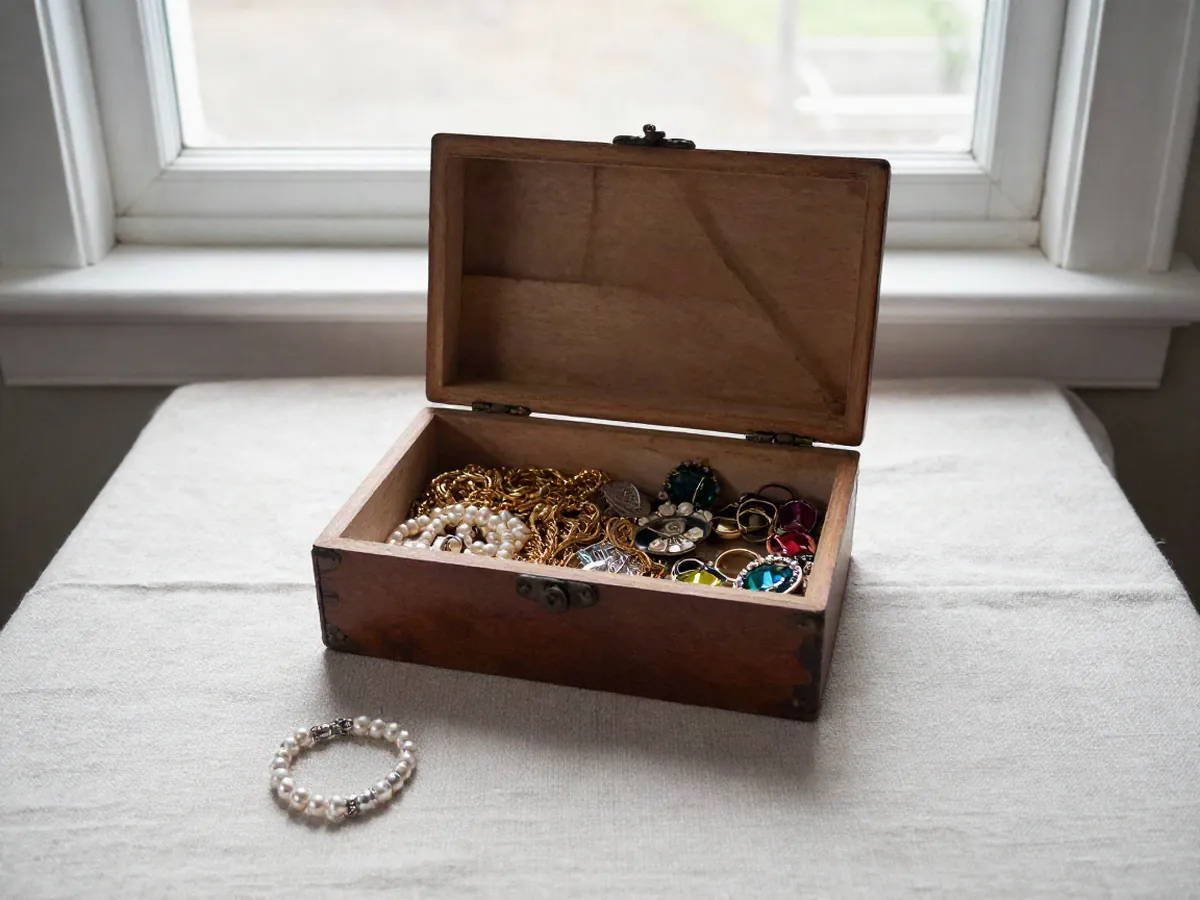
Most jewelry boxes hold a mix of fine pieces, plated fashion jewelry and the odd surprise. Here is a calm way to sort what you have: read the marks, check the metal, think about stones, makers and condition, and work out which pieces deserve a professional look.
Published
The short answer
Your jewelry is probably worth something if it is made of a precious metal (gold, silver, platinum or palladium), carries real gemstones, comes from a known maker, or is old, unusual and in good condition. Most other pieces, such as unmarked plated chains and mass-made fashion jewelry, are usually worth little in money, though they may matter a great deal to you.
You do not need to be an expert to make a first sort. Good light, a magnifier, a small scale, a magnet and a methodical approach will tell you which pieces to set aside, which to look up and which to show a jeweler or appraiser. Nothing in this guide replaces a professional opinion; it helps you decide where to spend one.
The kinds of value a piece can have
It helps to separate the different ways a piece can be worth money, because they are judged differently and often by different people:
- Metal value: what the gold, silver or platinum would be worth if melted. This is the floor for precious-metal pieces.
- Stone value: diamonds and coloured gemstones are valued on their own, by type, size and quality.
- Maker and design value: signed pieces from known jewelry houses or designers can sell for far more than their materials.
- Collector and period value: some vintage and antique pieces, including some costume jewelry, are sought by collectors.
Start with the marks
Lay everything out on a pale cloth and look at each piece with a magnifier in good light. Check clasps, the inside of ring shanks, earring posts and pendant bails. These are the marks that matter most for a first sort:
- Gold karat or fineness: 10K, 14K, 18K, or 417, 585, 750. These suggest solid gold alloy.
- Silver: 925, Sterling or Ster., or 800 and 835 on some older European pieces.
- Platinum: PT950, 950 Plat or similar marks.
- Plating and filled marks: GP, GE, HGE, RGP, GF or a fraction such as 1/20 12K GF. These mean only a layer of gold, so the metal value is low.
- Maker's marks or signatures: a name, initials or logo, often on the clasp or back.
- Country or assay office marks, which can point to independent testing.
When there are no marks
Missing marks do not mean a piece is worthless. Old pieces, handmade items and jewelry from countries without compulsory marking are often unmarked, and stamps wear away on rings and clasps. Equally, a mark is a claim, not proof: some marks are wrong or fake, and in the US the Federal Trade Commission's Jewelry Guides set out how gold content and plating should be described. If you are unsure what a mark means, look it up in a hallmark reference rather than guessing, because similar-looking numbers can stand for different metals.
For unmarked pieces, use simple clues before you spend money. A magnet that grabs a piece strongly suggests steel or another iron-based metal rather than gold or silver. Wear on the edges that reveals a different colour underneath suggests plating. A piece that feels heavy for its size is more promising than one that feels light. These clues only narrow things down; testing by a jeweler settles the metal.
Look at the stones
Stones are where the biggest surprises are, in both directions. Many sparkling stones in fashion jewelry are glass, crystal or cubic zirconia, while a small, slightly dull stone in an old ring can be a real diamond or sapphire. Clues that favour a real gemstone include a well-made setting in a precious metal, a hallmark, and stones that are cleanly cut rather than moulded.
If a piece comes with a grading report, check the report number on the lab's website; GIA's Report Check, for example, confirms that a report matches its records. Without paperwork, a jeweler can test stones in minutes with instruments, and that is the most efficient way to learn whether a stone is worth anything. When you take stones to be tested, bring the whole piece rather than removing them, since a jeweler can check the stones and the setting together and loose stones are easy to lose.
Makers, age and design
A maker's signature can change the value of a piece entirely. Look for names or logos on clasps, the backs of brooches and the inside of bands, and note them down exactly as they appear. Search the name with the word jewelry and see what similar signed pieces are, rather than assuming.
Age and style matter too. Pieces with hand-made details, unusual settings or a clear period style can interest collectors and dealers even when the materials are modest. Keep any original boxes, receipts and paperwork with the piece, since provenance helps buyers and appraisers. It also helps to photograph each piece, front and back, with its marks, so you have a record before anything is cleaned, repaired or sold.
Costume jewelry that still sells
Costume or fashion jewelry is made to look like fine jewelry at a lower cost, and most of it has little resale value. But not all: some designers and makers have collectors who still look for their pieces at antique shows and flea markets, and Coco Chanel helped make faux jewelry fashionable in its own right.
Signed costume pieces in good condition, with all their stones and working clasps, are the ones most likely to sell. Missing stones, green or worn plating and broken parts reduce value sharply. If a costume piece is signed, look up the name before you give it away.
Find the melt-value floor
For gold, silver and platinum pieces, the melt value is the least the metal is worth in principle. For gold it is the weight in grams × the fineness (0.585 for 14K, 0.750 for 18K) × the price of a gram of pure gold. Precious-metal prices change every trading day, so check today's figure on a price page instead of using an old number.
Melt value is a floor, not what a buyer will pay: buyers who melt jewelry pay less to cover testing, refining and their margin. It also ignores stones, makers and design. If a piece has any of those, do not sell it for scrap before someone qualified has looked at it, because once it is melted that extra value is gone. A simple list with each piece, its marks, its weight and your melt estimate makes it much easier to compare offers calmly.
When to get a professional opinion
A short visit to a reputable jeweler for testing is often enough to confirm metal and stones. A formal appraisal costs more and is worth it in specific cases:
- Pieces with diamonds or coloured stones you think may be real.
- Signed pieces from known jewelry houses or designers.
- Antique or unusual pieces, or anything with a family story attached.
- Items you want to insure, divide in an estate or sell for a significant sum.
- Any time two buyers' offers or opinions differ widely.
Where CaratAI fits in
CaratAI helps with the first sort. Photograph a piece and its marks and you get an estimate of the likely metal, fineness and type of piece, which makes it easier to decide which items to weigh, look up or take to a jeweler.
The free Gold Melt Value Calculator on this site then gives you the metal-only floor for gold pieces. Both are estimates: neither replaces an acid, XRF or assay test, a gemstone test, an appraisal, or a buyer's written offer.
Frequently asked questions
How do I know if my jewelry is real gold? Look for a karat or fineness mark, check that it is not paired with GP, GF or HGE, try a magnet, and have anything promising tested by a jeweler.
Is unmarked jewelry worthless? Not necessarily. Old and handmade pieces are often unmarked. Test before you decide.
What jewelry is worth the most? Usually pieces combining precious metal with real gemstones, signed pieces from known makers, and rare antique pieces in good condition.
Should I sell broken gold jewelry? Broken gold is still worth its melt value. Compare several written offers and check the weight and karat they record.
How much does an appraisal cost? It varies by appraiser and by the work involved, so ask for the fee and what the report will include before you book.
Sources and further reading
- eCFR: 16 CFR 23.3, misrepresentation as to gold content (FTC Jewelry Guides) — US rules on karat marks and on how plated, gold filled and electroplated items must be described.
- Wikipedia: Fineness — Fineness numbers for gold, silver and platinum, such as 585, 750, 925 and 950.
- Wikipedia: Costume jewelry — What costume (fashion) jewelry is, its history, and why some vintage pieces are sought by collectors.
- GIA: Report Check — Confirms that the details on a GIA grading report match GIA's archived record.
- American Society of Appraisers — A professional appraisal society with a Find an Appraiser search, including gems and jewelry specialists.
Keep exploring
All blog posts
What does 750 mean on gold? The 18K stamp explained
A 750 stamp means the metal is meant to be 750 parts gold per 1,000, which is 18 karat. Here is the arithmetic, where the mark is used, the other marks that usually sit next to it, what it does not prove, and how to confirm a piece really is 18K gold.
Read article
How to calculate the melt value of gold jewelry (per gram by karat)
Melt value is the price of the pure gold inside a piece, and you can work it out yourself with three numbers: the weight in grams, the fineness, and today's gold price. Here is the formula, a karat table, where to read the price, and worked examples you can repeat with your own jewelry.
Read article