
Gold marks
What does 750 mean on gold? The 18K stamp explained
A 750 stamp means the metal is meant to be 750 parts gold per 1,000, which is 18 karat. Here is the arithmetic, where the mark is used, the other marks that usually sit next to it, what it does not prove, and how to confirm a piece really is 18K gold.
Published
The short answer
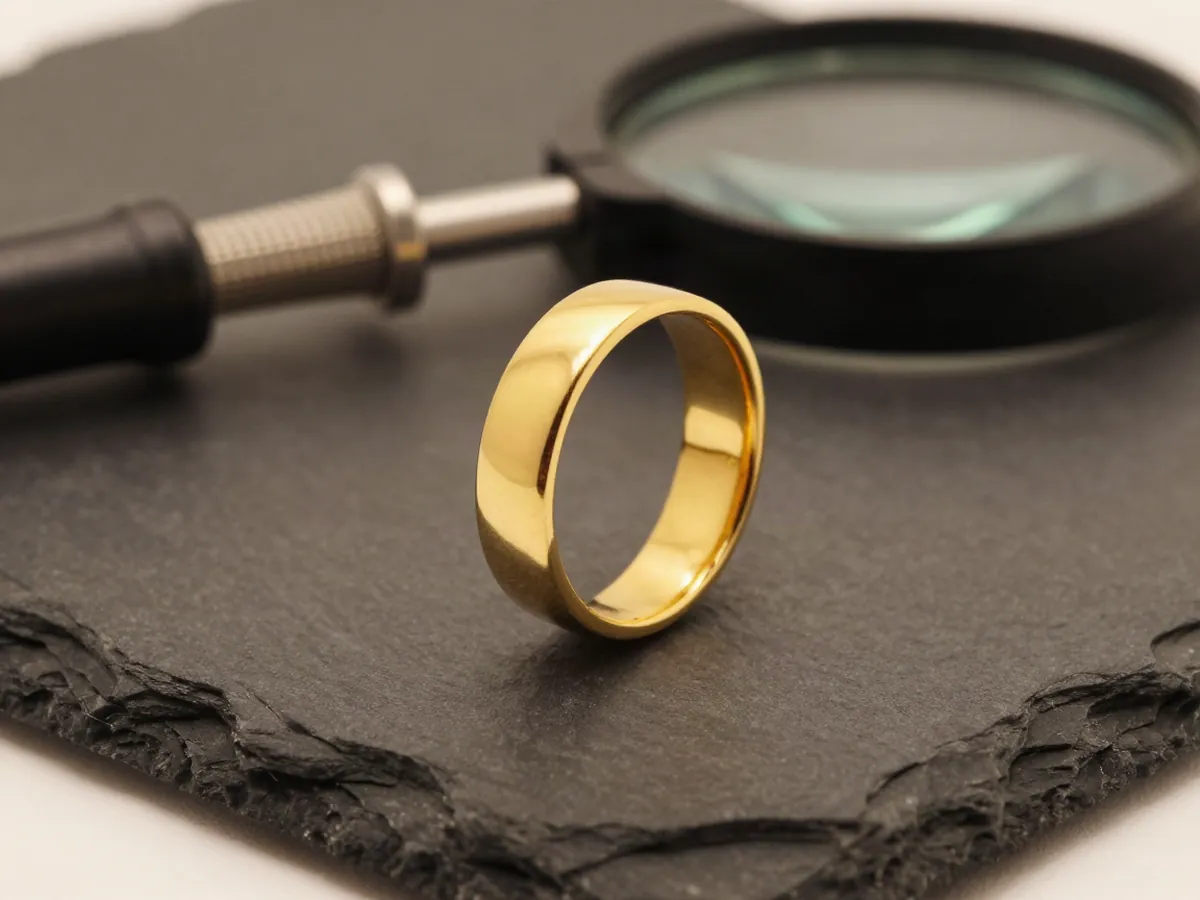
750 on gold means the alloy is meant to contain 750 parts of pure gold in every 1,000 parts of metal, or 75%. That is exactly the same as 18 karat, because 18 out of 24 parts is also 75%. The other 25% is a mix of metals such as silver, copper, zinc, nickel or palladium that give the piece its colour and make it hard enough to wear.
A 750 stamp is a claim, not a guarantee. In countries with independent hallmarking it sits alongside other compulsory marks that make it far more trustworthy; on its own, in a country without that system, it tells you what the maker says the metal is. The rest of this guide explains how to read it and how to check it.
The arithmetic behind 750
There are two common ways to describe how much gold is in an alloy. Karats count in 24ths, so 24K is (almost) pure gold and 18K is 18 parts gold to 6 parts other metal. Millesimal fineness counts in thousandths, so the same 18K alloy is written as 750.
Converting between them is simple: divide the karat by 24 and multiply by 1,000. 18 ÷ 24 × 1,000 = 750. The same rule gives 375 for 9K, 585 for 14K (the exact figure is 583.3, but jewelry marks round it to 585) and 916 for 22K. Going the other way, 750 ÷ 1,000 × 24 = 18.
Where you will see 750
Many European countries use decimal fineness marks such as 585 and 750 rather than 14K and 18K, and 750 is the typical fineness for modern jewelry in most of Europe. Even in places where higher purities are common, 18K is often the highest fineness used for stone-set pieces, because the metal must be hard enough to hold the stones securely. Common places to find a 750 stamp include:
- The inside of a ring shank.
- The clasp, tag or jump ring of a chain or bracelet.
- The post or back of an earring.
- The bail or back of a pendant.
- The case back or lugs of a watch, and sometimes the buckle of its strap.
The marks that usually sit next to it
In the United Kingdom a full hallmark has three compulsory marks: a sponsor's or maker's mark, a fineness mark recorded in parts per thousand such as 750, and an Assay Office mark showing which office tested the piece. The shape surrounding the fineness number shows the metal. A date letter and a traditional fineness symbol are optional extras. Other marks you may find next to a 750 stamp:
- A maker's or sponsor's mark: initials or a logo identifying who made or submitted the piece.
- An assay office or national mark showing an independent office tested it.
- A Convention mark: the fineness number surrounded by a pair of scales, recognised by member countries of the International Convention on Hallmarking.
- A date letter showing the year of hallmarking, where one was applied.
- A karat mark such as 18K or 18KT alongside or instead of the number.
- Plating letters such as GP, GE, HGE or RGP, which change the meaning completely (see below).
750 in yellow, white and rose gold
The 750 number describes the share of gold, not the colour. 18K yellow, white and rose gold all contain 75% gold; what differs is the other 25%. More copper pushes the colour towards pink or red, while white metals such as palladium or nickel bleach it towards white.
Most 18K white gold is also rhodium plated to make it brighter and whiter. When that plating wears thin, a slightly warm tone can show through, which is normal and does not mean the piece is fake or lower in gold. A jeweler can re-plate it.
750 does not always mean gold
The number 750 is used for more than one metal. Platinum is also made in a 750 fineness, and 750 appears as an uncommon silver standard on some older German, Swiss and Austro-Hungarian silver. In the UK system the shape around the fineness number tells you the metal, and a Convention mark carries its own symbol, but a bare 750 on an unknown piece does not by itself say which metal is meant.
Colour and context help. A white piece marked 750 could be 18K white gold or 750 platinum, which are very different in value. A tarnished grey item from an old European household marked 750 might be silver. If the mark is unclear, treat the metal as unknown until it is tested.
Signs a 750 stamp may not be what it seems
Fake and misleading marks exist, and some genuine pieces carry confusing ones. In the US, the Federal Trade Commission's Jewelry Guides say an item can only be described with a karat fineness if it really is made throughout of that alloy, and that plated or filled items must be clearly qualified. These are the warning signs worth a closer look:
- A 750 next to letters such as GP, GE, HGE, RGP or GF, which mean the gold is only a surface layer over another metal.
- Worn edges, clasps or high points showing a different colour underneath.
- A piece that feels much lighter than its size suggests, which can point to plating over a lighter base metal or to a hollow construction.
- A stamp that is crooked, shallow, blurred or placed where it looks added later.
- A price far below what 18K gold of that weight would be worth as metal.
How to confirm a piece is really 18K
A magnet is a quick first screen: gold is not magnetic, so a strong pull suggests a steel or other ferrous base, though a lack of pull proves nothing because many non-gold metals are not magnetic either. Beyond that, the reliable checks need a jeweler or assayer.
Acid testing on a touchstone compares the streak with test acids for different karats. X-ray fluorescence (XRF) analysers read the surface composition without damaging the piece, but because they measure only the outer layer, thick plating can mislead them. A specific gravity test compares the weight in air and in water; 18K alloys fall in a known density range that is clearly below pure gold. Fire assay is the most accurate method but destroys a small sample, so it is used mainly by refiners.
In the US, the National Stamping Act allows a small tolerance: an item made without solder can test up to three parts per thousand below its mark, and with solder up to seven. A piece marked 750 that tests far below that is mis-marked.
What 750 means for value
Because 750 tells you that three quarters of the metal weight should be gold, it is the key number in a melt calculation: weight in grams × 0.750 × the price of one gram of pure gold. Gold prices move every trading day, so look up the current figure on a price page before you calculate rather than relying on an old number.
Melt value is a floor, not a full valuation. 18K pieces are often fine jewelry with stones, maker's marks or design value that can be worth much more than the metal, and a buyer melting the gold will pay less than melt value to cover testing and refining. Use the free Gold Melt Value Calculator on this site for the metal-only figure.
Where CaratAI fits in
Tiny stamps are hard to read and easy to misread. CaratAI lets you photograph a piece and its stamp and get an estimate of what the mark and the metal probably are, which helps you decide whether a 750 piece is worth taking to a jeweler for testing.
The free Hallmark Quick Reference on this site lists the common fineness numbers and plating abbreviations side by side. Both give estimates and context; neither replaces an acid, XRF or assay test or a professional appraisal.
Frequently asked questions
Is 750 gold real gold? A 750 mark claims 18K gold, which is 75% pure gold. Whether a particular piece is real depends on the mark being genuine, so test anything important.
Is 750 better than 585? 750 contains more gold (75% vs 58.5%), so it is worth more by weight and has a richer colour, but 585 (14K) is harder and more scratch-resistant for everyday wear.
What does 750 mean on a white ring? It may be 18K white gold or 750 platinum. Look for other marks and have it tested if it matters.
Does 750 mean the same as 18K and 18KT? Yes. They are three ways of saying 75% gold.
Is 750 gold plated? Not if 750 is the only mark. If it appears with GP, GE, HGE, RGP or GF, the gold is only a surface layer.
Sources and further reading
- Wikipedia: Fineness — Millesimal fineness: 750 = 75% gold = 18 karat, the typical fineness for modern jewelry in most of Europe; 750 also appears as a platinum and an old silver standard.
- GOV.UK: Hallmarking practical guidance summary — The three compulsory UK marks (sponsor, fineness in parts per thousand, assay office), the optional date letter and the Convention mark.
- eCFR: 16 CFR 23.3, misrepresentation as to gold content (FTC Jewelry Guides) — US rules on karat marks and on qualifying plated, gold filled and electroplated items, with National Stamping Act tolerances.
- Wikipedia: Hallmark — Background on hallmarking systems and the marks used in different countries.
Keep exploring
All blog posts
How to calculate the melt value of gold jewelry (per gram by karat)
Melt value is the price of the pure gold inside a piece, and you can work it out yourself with three numbers: the weight in grams, the fineness, and today's gold price. Here is the formula, a karat table, where to read the price, and worked examples you can repeat with your own jewelry.
Read article
How to tell if a diamond is real: myths and reliable checks
The fog test, the water glass and the newspaper trick are everywhere, but none of them can prove a diamond is real. Here is what home checks can honestly tell you, what a jeweler's tester measures, and how a grading report settles the question.
Read article