
Gold basics
10K vs 14K vs 18K gold: what the difference means
The karat number tells you how much of a piece is pure gold. Here is what 10K, 14K and 18K mean in percentages and stamps, how they differ in wear, color and value per gram, and how to choose between them.
Published
The short answer
Karats measure how much of a gold alloy is pure gold, out of 24 parts. 24K is pure gold. 18K is 18 parts gold out of 24, or 75 percent. 14K is 14 parts out of 24, about 58.3 percent, and is usually stamped 585. 10K is 10 parts out of 24, about 41.7 percent, and is often stamped 417. The rest of the metal is an alloy of other metals, such as silver, copper, zinc or nickel, which change the hardness and the color.
So the difference between 10K, 14K and 18K is not real gold versus fake gold. All three are gold alloys. What changes is the share of gold in each gram, and with it the color, how the metal wears and the value of the metal itself. None of them is simply the best; each suits a different kind of jewelry and budget.
Gold content compared, karat by karat
Here are the common karats side by side, with the fineness number you may see stamped instead of the karat. Fineness is gold content in parts per thousand, so 750 means 750 parts gold in every 1,000.
- 9K: 37.5 percent gold, stamped 375. Common in the UK and some other markets.
- 10K: about 41.7 percent gold, stamped 10K or 417.
- 14K: about 58.3 percent gold, usually stamped 14K or 585. The 585 mark rounds the figure slightly up.
- 18K: 75 percent gold, stamped 18K or 750.
- 22K: about 91.7 percent gold, stamped 22K or 916. Often used for traditional jewelry in some markets.
- 24K: pure gold, stamped 24K, 999 or 9999. Very soft and rarely used for rings that are worn every day.
How 10K, 14K and 18K marks look on jewelry
In the United States, the FTC Jewelry Guides say a gold alloy should not be described simply as gold; the correct karat designation should appear right before the word, as in 14K gold. That is why American pieces usually carry a karat stamp such as 10K, 14K or 18K, often next to a maker's trademark. European and older pieces more often use the fineness number: 417, 585 or 750.
In the UK, a full hallmark includes a sponsor's mark, a fineness mark in parts per thousand and an assay office mark, and gold items over 1 gram sold as gold must be hallmarked. Either way, a stamp is a claim about the metal, not a test result. Marks can be worn, misread or simply wrong, so treat them as a clue you check, not as proof.
Durability: which karat holds up better?
Pure gold is soft. The other metals in an alloy make it harder, so as a general rule, a lower karat with more alloy is harder and resists scratches and dents better than a higher karat. A 10K ring usually shows fewer scuffs than an 18K ring after the same years of wear, and 14K sits in between.
That does not make 18K fragile. It is used widely for fine jewelry, and many people wear 18K rings every day; they simply show a soft patina of small scratches sooner and may need polishing more often. The design matters as much as the karat: thin bands, delicate prongs and chains with small links wear faster in any karat. For a ring worn while working with your hands, a sturdier design in 14K is a common compromise.
Color: why 18K looks more yellow
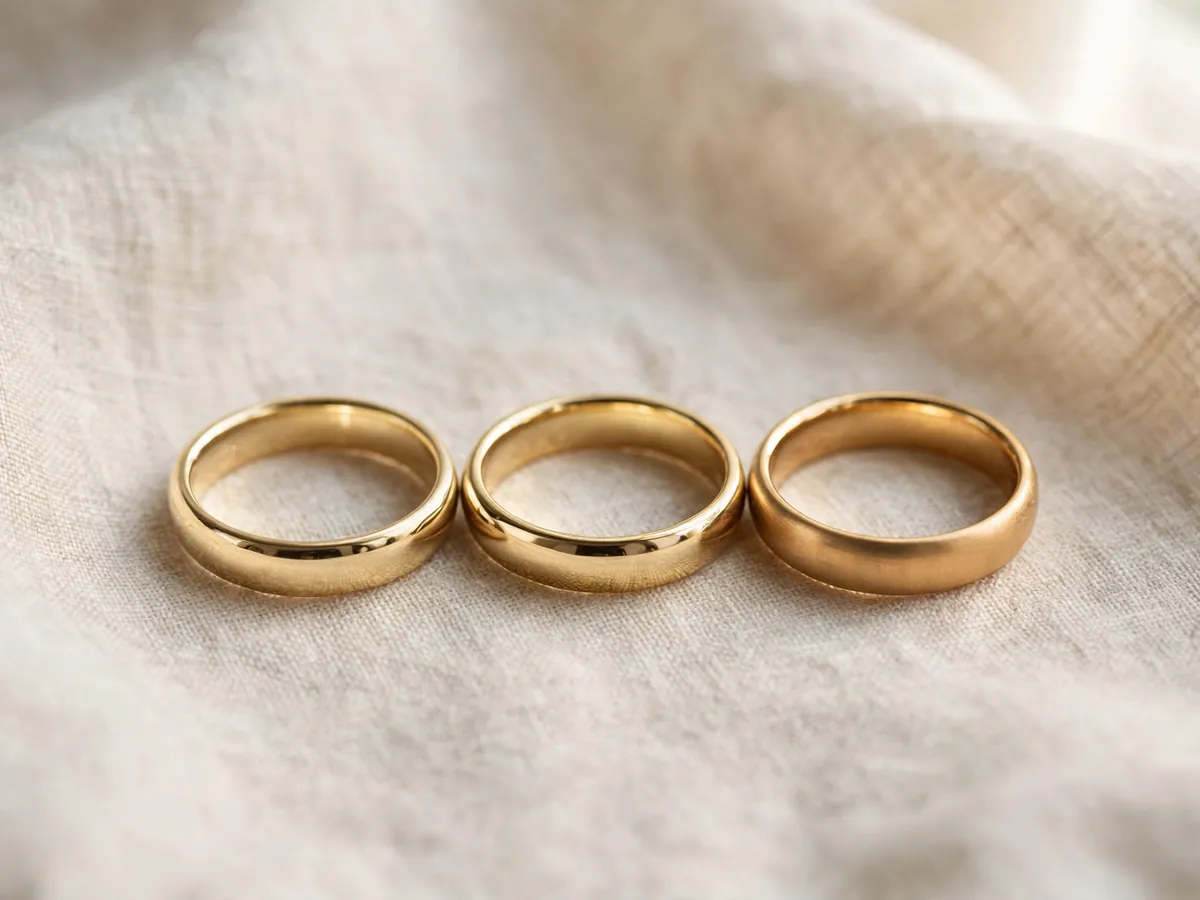
The more gold an alloy contains, the richer and deeper its yellow tends to be. 18K yellow gold has a warm, saturated color; 14K is a little lighter; 10K is paler still, sometimes with a slightly brassy or cooler tone depending on the alloy. Seen side by side, the difference is easy to notice; on its own, a single piece can be harder to place.
The alloy also creates the other colors of gold. Rose gold uses more copper, and white gold uses metals that whiten the alloy, often with a rhodium plating on top for a bright white finish. That plating wears over time, which is why white gold can slowly show a yellowish tint and may need re-plating. Color alone is not a reliable way to tell the karat, because the mix of alloy metals varies from maker to maker.
Sensitive skin and alloy metals
Some people react to certain metals used in gold alloys, nickel being the best known, and some white gold alloys contain it. A lower karat simply has more room for other metals. If you know you react to a metal, ask the seller what the alloy contains before you buy, rather than assuming that any gold piece will be fine.
Value per gram: a worked example
The melt value of gold jewelry depends on its weight, its gold content and the current gold price. Gold is priced per troy ounce, which is about 31.103 grams. Take a round illustrative price of 3,000 US dollars per troy ounce, not today's price. That works out to about 96.45 dollars per gram of pure gold. Multiply by the gold content and you get, roughly, 40 dollars per gram of 10K, 56 dollars per gram of 14K at 585 and 72 dollars per gram of 18K.
For a 5 gram plain band, that gives a metal value of about 200 dollars in 10K, 280 dollars in 14K and 360 dollars in 18K at that illustrative price. Remember that this is metal value only. Retail prices include design, labor, stones and margin, and a buyer of scrap gold usually pays less than melt value. Use the calculator with today's price and your own weight to see the real figures.
How to choose between 10K, 14K and 18K
There is no single right answer, but these common situations can help you decide.
- Everyday ring on a hand that works hard: 14K is a popular balance of color and durability; 10K if budget and scratch resistance matter most.
- Piece chosen for its deep yellow color or as a long-term keepsake: 18K is often preferred.
- Earrings and pendants that see little friction: any of the three can work, so choose by color and budget.
- Sensitive skin: ask about the exact alloy, especially for white gold.
- Matching an existing piece: match the karat and color as well as the style, because a different alloy can look noticeably different next to it.
Common mistakes when comparing karats
A few misunderstandings come up again and again when people compare gold jewelry.
- Thinking 10K or 14K is not real gold. They are real gold alloys with less gold per gram.
- Comparing prices without comparing weight. A heavier 14K piece can contain more gold than a lighter 18K one.
- Reading 585 as 58.5K or 750 as 7.5K. These are parts per thousand: 585 is 14K and 750 is 18K.
- Assuming a stamp proves the karat. A mark is a claim to check, not a test.
- Ignoring GF, GP or HGE after the number, which signals plating or gold fill rather than solid gold.
Where a photo estimate fits in
If you are sorting through several gold pieces, a photo can help you keep track of them. Jewelry Identifier — CaratAI looks at a jewelry photo and gives AI-generated observations about the visible type, materials, style and possible gemstones, plus an estimated value range you can save to your collection with notes such as the stamp you found and the weight.
A photo cannot measure gold content, so it cannot tell 14K from 18K with certainty. Use the result to organise your pieces and decide what to ask, and rely on the stamp, an accurate weight and a professional test or appraisal for any decision that depends on the real karat or value.
Frequently asked questions
Is 14K or 18K better? Neither is better in every way. 18K has more gold and a richer yellow; 14K is harder and usually costs less. For a ring worn every day, many people choose 14K; for color and gold content, 18K.
Is 10K gold worth buying? It can be, if you want an affordable, hard-wearing piece. It contains less gold per gram, so its metal value is lower, and its color is paler than 14K or 18K.
What does 585 mean on gold? 585 is a fineness mark meaning 585 parts gold per 1,000, which corresponds to 14K gold.
Can I tell 10K, 14K and 18K apart by looking? Not reliably. Side by side, 18K often looks more yellow, but alloys vary. Check the stamp, then ask a jeweler to test the metal if the karat matters.
Sources and further reading
- eCFR: 16 CFR 23.3, misrepresentation as to gold content (FTC Jewelry Guides) — Why a gold alloy should be described with its karat fineness before the word gold, and the rules for gold plated and gold filled terms.
- GOV.UK: Hallmarking practical guidance summary — The compulsory parts of a UK hallmark, fineness in parts per thousand (for example 375 for 9 carat gold) and the 1 gram minimum weight for gold.
Keep exploring
All blog posts
How to tell if a diamond is real: myths and reliable checks
The fog test, the water glass and the newspaper trick are everywhere, but none of them can prove a diamond is real. Here is what home checks can honestly tell you, what a jeweler's tester measures, and how a grading report settles the question.
Read article
Gold price drop: what it means for the value of your gold jewelry
Spot gold fell below $3,900 an ounce on October 30, 2026, its lowest level in more than a year. Here is how a falling gold price changes the melt value of your rings and chains per gram by karat, what it does and does not do to buyer offers, and how to recalculate your own pieces.
Read article